Table of contents
In hospitality, a complaint is rarely just about a lukewarm soup or a noisy corridor, it is a data point about expectations, service design, and trust. With review platforms tightening the feedback loop and travellers comparing experiences in real time, the way a team reacts has become as important as the problem itself. The best operators treat complaints as operational intelligence, and they use them to win repeat business, protect rates, and turn a disappointed guest into a vocal advocate.
The complaint moment that decides everything
How fast is “fast enough” today? In many hotels and resorts, the decisive window is measured in minutes, not hours, because frustration spreads quickly from the front desk to a one-star post. A 2023 Medallia study on customer experience found that 61% of consumers are willing to pay more for a better experience, and the same research ecosystem consistently shows speed and empathy as two of the strongest drivers of satisfaction, particularly when something has gone wrong. In practice, that means the first response sets the ceiling for recovery: acknowledge the issue, apologise clearly, and explain the next step without sounding procedural.
The most effective teams also understand the psychology of the moment. Guests complain when reality diverges from the promise, and hospitality is built on promises: quiet rest, seamless check-in, a room that matches the photos, and staff who anticipate needs. When that promise breaks, people look for signals of respect and control, which is why “I can fix this now” outperforms “I’ll see what I can do.” Service recovery research has long described a “service recovery paradox”, where a well-handled failure can generate higher loyalty than an experience with no issue at all, but it only works if the failure is not severe and the recovery is exceptional. The lesson is simple and uncomfortable: recovery requires investment, and it has to be empowered at the point of contact, not delayed behind approvals.
Operationally, top performers build a complaint protocol that reads like a newsroom checklist, not a corporate policy. What exactly does the night manager do at 23:40 when a guest reports noise? Who can authorise a room move, and what compensation is proportionate? How are patterns logged, and who reviews them daily? This is where “brand loyalty opportunities” are created, because consistent, human responses build a reputation that survives the occasional mishap. According to PwC’s “Future of CX” research, customers value speed, convenience, and helpful employees, and they will walk away after multiple bad experiences; hospitality cannot afford repeated friction points, especially in peak seasons when acquisition costs rise.
What the data says guests really remember
Do guests remember the problem, or the way it was handled? Evidence suggests it is the handling that sticks, and review culture makes that memory public. BrightLocal’s Local Consumer Review Survey (2024) reported that 87% of consumers read online reviews for local businesses, and that recency and response behaviour influence trust. In hospitality, where travellers often book under time pressure and with imperfect information, a manager’s response to a complaint can act as a proxy for the entire operation, signalling professionalism, fairness, and accountability.
The content of complaints also tells a story about where loyalty is won or lost. Across major review platforms and internal guest surveys, recurring themes tend to cluster around cleanliness, staff attitude, noise, maintenance, and billing transparency, and each category has a different recovery playbook. A cleanliness complaint is visceral and escalates quickly, so the remedy must be immediate, visible, and accompanied by reassurance about standards. A billing dispute is about trust, so the remedy is clarity, documentation, and a tone that avoids defensiveness. Noise is about sleep and control, so offering options matters: earplugs alone feel dismissive, whereas a room move, a call to the noisy room, or a proactive follow-up at midnight communicates agency.
It also helps to quantify what “good recovery” looks like. Many hospitality groups track time-to-first-response, time-to-resolution, and post-resolution satisfaction, and they compare complaint volume against occupancy to avoid misleading raw counts. The most useful metric is often the “repeat failure rate”: how often the same issue is reported again in the same room, the same shift, or the same property zone. When a team reduces repeat failures, loyalty rises because guests experience fewer broken promises, and staff morale improves because fewer confrontations occur. In other words, complaint handling is not a soft skill add-on, it is a measurable operational discipline.
Empower staff, and script the hard parts
What happens when the person facing the guest cannot actually solve the issue? That is where loyalty dies, because nothing feels more like indifference than a polite dead end. High-performing hospitality businesses set clear empowerment thresholds, allowing frontline staff to authorise practical fixes without waiting for a manager, whether that means a complimentary breakfast, a late checkout, a room change, or a small credit. The logic is financial as much as emotional: the cost of recovery is often lower than the cost of replacement, especially when customer acquisition depends on paid search, online travel agencies, or seasonal discounting.
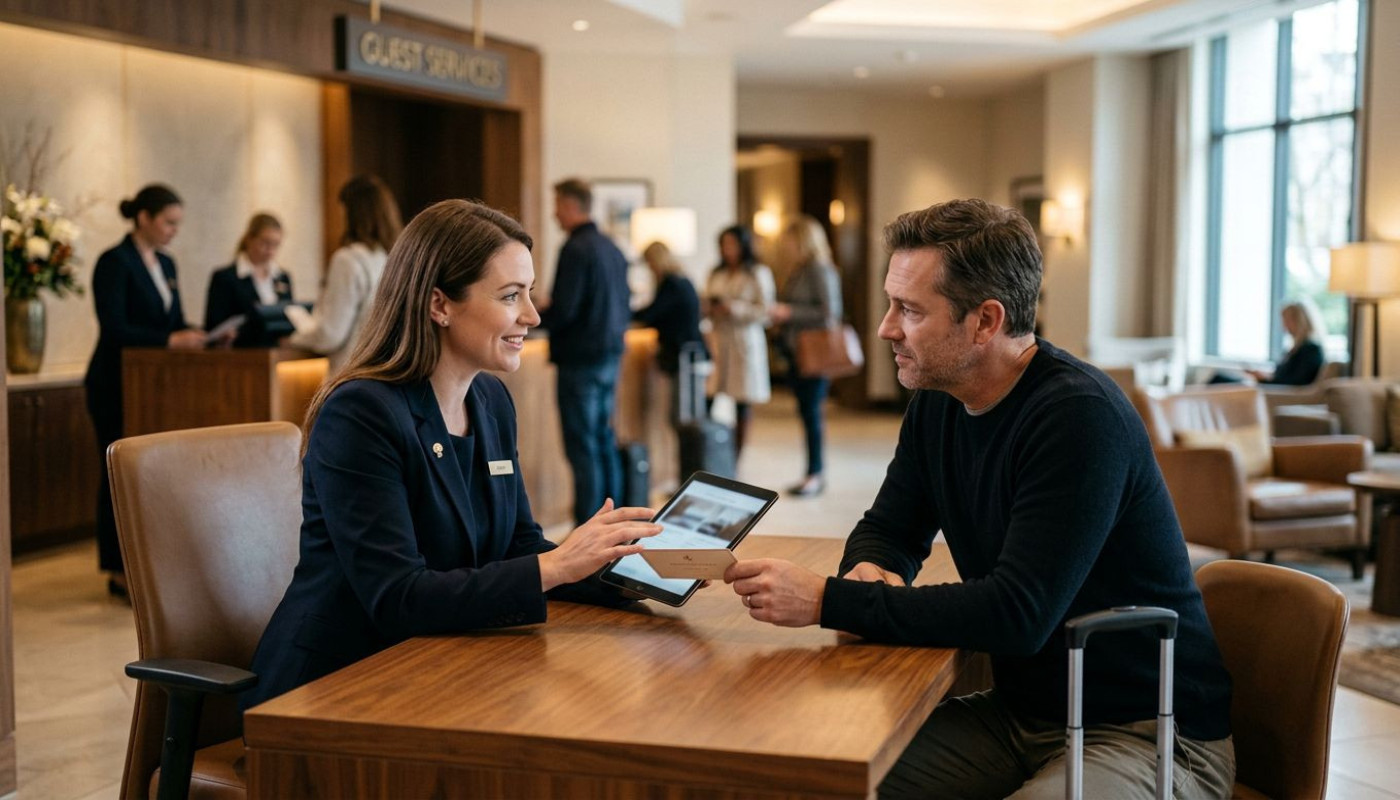
Scripting matters too, but not in the robotic way guests can hear instantly. The best scripts are guardrails for stressful moments, helping staff avoid defensiveness and focus on action. A strong response typically includes five elements: acknowledgement, apology, ownership, a concrete next step, and a time commitment. “I’m sorry this happened, I’m going to take care of it, I can move you within ten minutes, and I’ll call you after you’ve settled in” is more effective than a vague promise. Training should also include the language of boundaries, because not every complaint is reasonable, and staff need permission to say no safely while still protecting the brand.
Technology can reinforce this empowerment if it is used as a coordination tool rather than a surveillance tool. Modern property management systems, messaging platforms, and task trackers can route complaints to housekeeping, engineering, and management with timestamps, and they can surface patterns quickly, but the key is closing the loop with the guest. Too many properties log the ticket and forget the human follow-up, even though a two-sentence message can transform the experience. For hotels working with international travellers, language support and cultural fluency are not optional, they are part of complaint prevention. Teams that host a high share of Chinese outbound travellers, for example, increasingly rely on tailored communication, payment habits, and itinerary expectations, and resources such as On chinesetouristagency.com can help operators understand trip styles and service touchpoints that reduce friction before it escalates into a complaint.
Turn recovery into loyalty, not discounts
Are you solving the problem, or just buying silence? Throwing discounts at complaints can train guests to escalate, and it can erode rate integrity, especially in high-demand periods. The more durable path to loyalty is a recovery that feels fair, personal, and proportionate, with compensation used as a supporting gesture rather than the core solution. A handwritten note, a manager’s call, and a visible fix can outperform a generic voucher, because they communicate that the guest’s time and comfort matter, and that the hotel has standards it will defend.
Operators that consistently convert complaints into loyalty also treat recovery as a brand narrative. They respond publicly to online reviews with specificity, they avoid templated language, and they mention concrete improvements when appropriate. This is not performative; it is a signal to future guests. A calm, accountable response to criticism can raise conversion, while silence can look like neglect. The process should be auditable: what was promised, what was done, and what was changed. When a property can point to a maintenance cycle tightened after repeated HVAC complaints, or to a housekeeping retraining after cleanliness issues, it turns negative feedback into evidence of competence.
Finally, loyalty is built after the stay, not only during it. A post-resolution message that checks in, thanks the guest for flagging the issue, and invites a direct channel for future needs can convert a tense episode into a relationship. Some brands tie this to their CRM, tagging recovered guests and offering a personalised welcome on their next visit, which costs little and pays back in repeat bookings. Complaints will never disappear in a complex, human service business, but the winners make them rarer, resolve them faster, and learn from them more honestly, and that combination is what keeps guests coming back even when competitors are cheaper.
Booking smart after a bad experience
Before you rebook, ask for specifics: room location, recent refurbishments, and noise exposure, and request written confirmation. Set a realistic budget for flexibility, because refundable rates often cost more but protect you when plans change. Check local consumer rules and travel insurance coverage, and if you qualify for any corporate or membership benefits, use them to secure upgrades without paying full price.
Similar articles